Why learning in their native language gives Haitian students a winning start
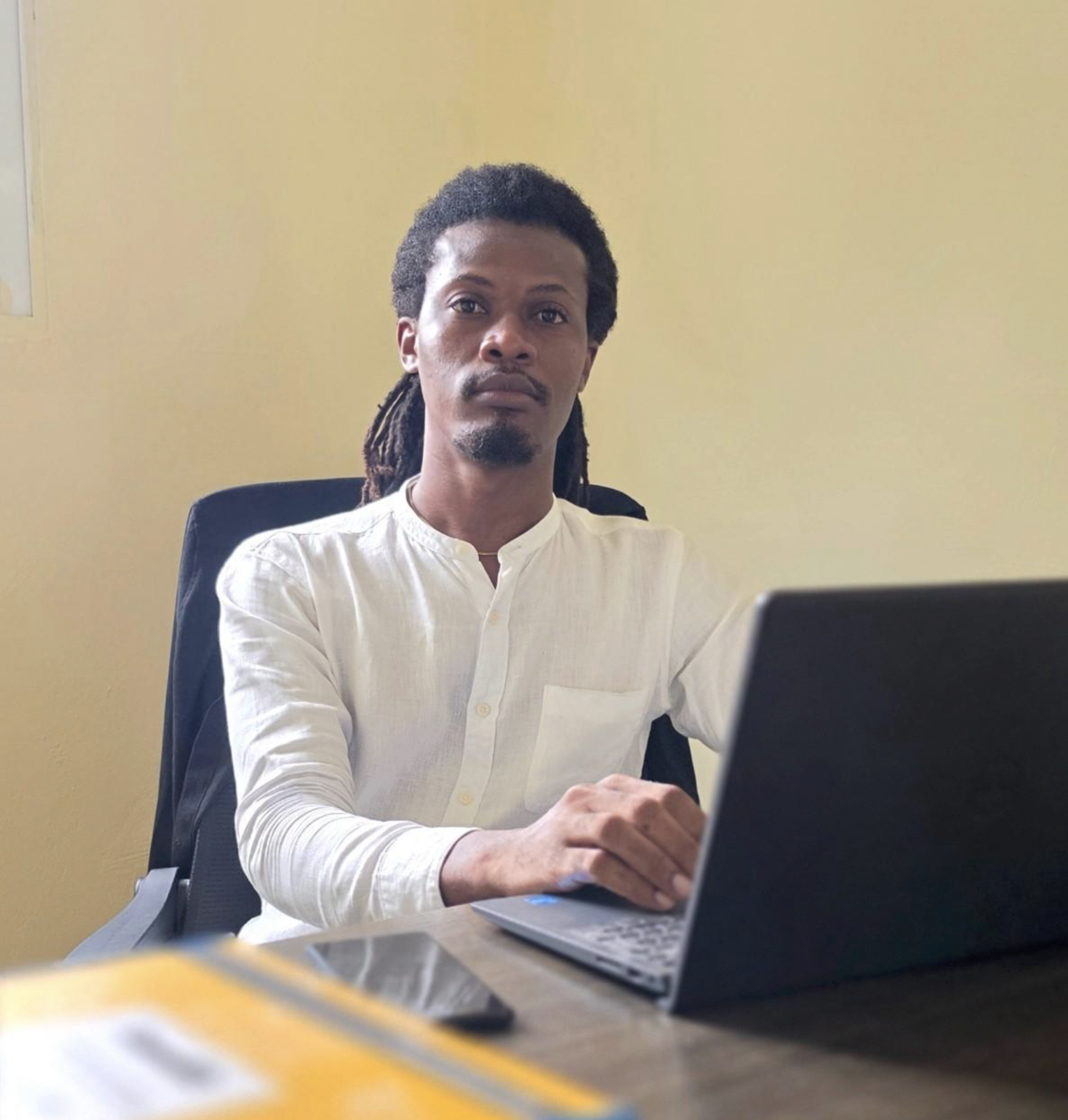
Francky Saint-Fleur, Academic Director, Kanpe Fèm Christian Academy
“Konesans se richès. (Knowledge is wealth.)”
Every year on October 28, Creole speakers around the world celebrate Jounen Entènasyonal Lang Kreyòl, International Creole Day. To mark the occasion, we asked Francky Saint-Fleur, Academic Director of Kanpe Fèm Christian Academy (KFCA), to reflect on the language nearly every Haitian child speaks at home, and on why learning in that language is one of the surest paths to academic success. His reflection, written in Kreyòl and adapted here in English, follows.
Education begins with language
Every strong society invests in what lies at the very heart of its future: education. Education shapes who we become, gives us the tools to solve problems, and anchors our values. As Nelson Mandela put it, education is the most powerful weapon we can use to change the world.
And the first tool of education is language. Language turns our thoughts into images, and those images into words. A Haitian proverb says it simply: lapawòl se kle ki louvri tout pòt, the spoken word is the key that opens every door. For Haitian children, that key is Kreyòl. It is the language they dream in, play in, and think in. As Proverbs 18:21 reminds us, “Death and life are in the power of the tongue.” Words have power—and for Haitian children, learning in Kreyòl gives them the words to express their ideas, ask questions, and build knowledge.
For most Haitian students, the language of their textbooks is not the language of their daily lives. At home, with friends, and among classmates, they speak Kreyòl. In class, many must first decode a lesson in another language, then think it through in Kreyòl, then translate their answer back. That is three steps where there should be one.
When a student receives an explanation in a language she has mastered, she can focus on the concept itself instead of spending her energy translating every sentence. This matters most in mathematics, science, philosophy, and every subject that demands reasoning. A student who fully understands the lesson is more likely to ask questions, explain her thinking, work in a team, and debate a problem: exactly the skills that set students apart in a competitive world.
What the research tells us
Nearly all Haitians speak Kreyòl. MIT linguist Michel DeGraff, a leading voice for Kreyòl-based education, argues that when Kreyòl is the main language of instruction, more students will pass their exams and fewer will leave school. The MIT-Haiti Initiative has paired Kreyòl with active, hands-on teaching to strengthen learning in science, technology, engineering, and math.
The global evidence points the same way. A UNESCO report, Languages Matter, finds that 40 percent of the world’s people lack access to education in a language they speak or understand, a figure that reaches 90 percent in some low- and middle-income countries. The World Bank’s study Loud and Clear shows that children taught in a language they have not mastered often struggle to read, write, and understand well, even after years of school. Its recommendation is clear: teach children in their first language through at least the first six years of primary school, then add other languages on that strong foundation.
In other words, learning in Kreyòl does not hold students back from French or English. It is the solid ground on which every other language, and every other subject, is built.
KFCA is not alone in this conviction. Across Haiti, a growing movement is putting Kreyòl at the center of learning. On the island of La Gonâve, Lekòl Kominotè Matènwa teaches children in Kreyòl from kindergarten, introducing French step by step as a second language. Anseye pou Ayiti, a member of the global Teach For All network, trains teacher leaders who help students connect to learning in their native Kreyòl. And since 2014, the Akademi Kreyòl Ayisyen, Haiti’s official Kreyòl language academy, has worked to standardize the language and encourage more books published in Kreyòl. KFCA is proud to join this movement, bringing Kreyòl-first learning to students in northern Haiti.
Voices from KFCA
Our students feel the difference. As one KFCA student shared:
“I feel freer when all the classes are in Kreyòl. I have more freedom to ask questions and to work. There were many concepts I never understood when some classes were taught to me before, but now it’s easy for me. The freedom the school gives us to do homework and take exams in the same language is everything.”
Our teachers see it too, but they also see what is missing.
The missing piece: academic books in Kreyòl
Teaching in Kreyòl is only half the solution. Students also need textbooks in Kreyòl. Today, most academic books in Haiti, especially in mathematics and science, are written in French.
That gap lands on our teachers. Most of them were trained in French, so every lesson asks them to shift their own thinking: to take what they learned in French, reason through it again in Kreyòl, and find the words that will make it clear to a child. One KFCA teacher described how demanding it is to translate a French textbook word for word. Before a lesson can be taught, it must first be prepared and then rebuilt in Kreyòl, term by term and example by example. It is hours of careful mental work for every class, on top of teaching itself.
It is an investment, and one that Help for Haiti and APMCH have chosen to make. True to the school’s name, we are standing firm behind our teachers as they carry this extra load, because we believe it is the surest way to set KFCA, and every one of its students, up for success.
Books in Kreyòl change everything. With them, students can study and review at home, parents can follow along with their children’s learning, and teachers can focus on teaching rather than translating. A child who can read a science book in the language she thinks in can go further, faster, and with greater confidence.
KFCA has already developed a digital library in collaboration with EducaVision, giving students and teachers access to a collection of learning resources in Kreyòl, French, and English. The collection includes Kreyòl materials in science and mathematics, as well as Haitian literature, dictionaries, interactive activities, and resources on Haitian history and culture. It is an important first step toward putting more learning resources in the hands of our students and teachers. With your help, we can build on this foundation by expanding access to age-appropriate Kreyòl materials that support the secondary-school curriculum, particularly in mathematics and science.
Kreyòl is a language like every other, and it deserves its full place in the classroom. When we put Kreyòl at the heart of learning, we will raise a generation of students ready to compete with anyone, anywhere.
Strong roots, global reach at KFCA
Kanpe fèm means “stand firm” in Haitian Creole. Kanpe Fèm Christian Academy, an initiative of APMCH and Help for Haiti in northern Haiti, opened its doors this October to 112 students and 13 teachers.
At KFCA, Kreyòl is the academic foundation. French literacy is built step by step, and English is taught to open doors to higher education and careers, so students graduate confident in all three languages. We believe language access is a matter of equity: no child should be held back from mathematics or science because of the language on the page.
Academic excellence. National standards are our floor, not our ceiling. Students learn through STEM, inquiry, and hands-on projects grounded in Haitian life, with an emphasis on critical thinking over memorization.
Christian character. Integrity, dignity, service, and ethical leadership are woven into daily school life.
Care for the whole child. KFCA is a school that listens, with a dedicated social worker who supports students and families.
Help put Kreyòl books in students’ hands
This International Creole Day, we invite you to invest in students who are learning, thinking, and dreaming in Kreyòl. Your gift helps KFCA grow its Kreyòl library with academic books and learning materials in math, science, and beyond, so every student can study in the language they understand best and reach the level of excellence they deserve, while freeing teachers to spend their hours teaching instead of translating. Give today at helpforhaiti.org/donate.